Design & Planning As Built Client Portal Part L Photo Evidence 01386 365145 Book a Test
Part E · As Built Testing

Sound Insulation Testing
in Birmingham & the West Midlands

Accredited airborne and impact sound testing across Birmingham, Solihull, Coventry, Wolverhampton, Dudley and Walsall. Reports within 24 hours. Can be combined with air tightness testing on the same visit.

24 hr
report turnaround
after test
Combined
with air tightness
on same visit

Book a Test

Regular slots across Birmingham & the West Midlands

Thanks — we'll confirm availability and pricing within one working day.

Accredited Part E testing across the West Midlands' largest development market.
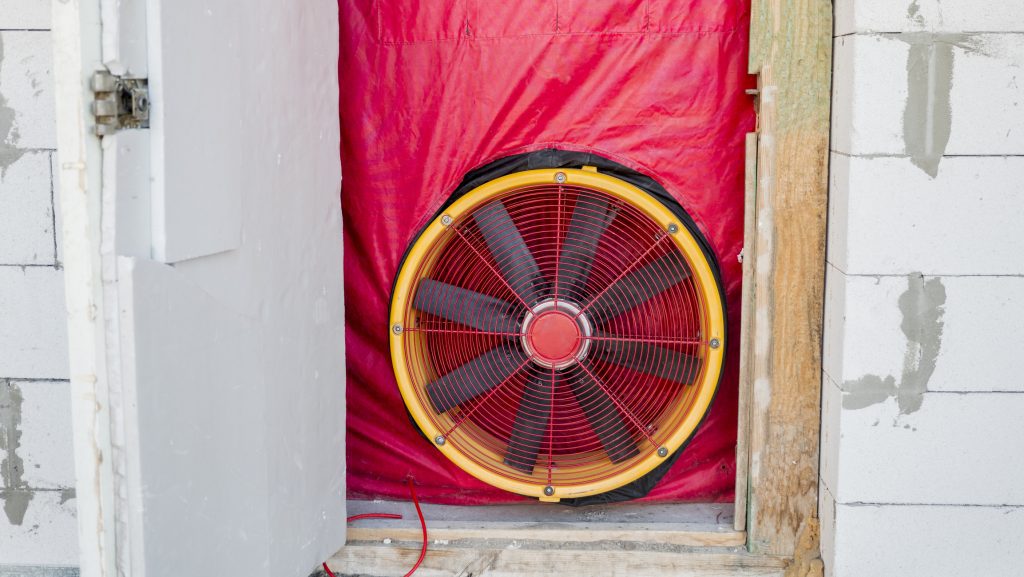
Sound insulation testing equipment in Birmingham

Birmingham and the wider West Midlands represent one of the UK's most active development markets, with large-scale apartment blocks, terraced housing schemes, and conversion projects across the conurbation. We maintain regular testing slots across the region and travel from our Worcester base in under an hour.

Sound insulation testing — also called acoustic testing or Part E testing — measures how effectively separating walls and floors prevent sound from passing between adjoining dwellings. Airborne tests measure speech and music transmission (DnT,w + Ctr in dB); impact tests measure footstep noise transmission through floors (L'nT,w in dB).

Part E of the Building Regulations requires all new build attached dwellings, apartments, and material change-of-use conversions in England and Wales to demonstrate acceptable sound insulation performance before building control sign-off.

Beyond compliance, good sound insulation is one of the strongest predictors of resident satisfaction in multi-occupancy buildings. Flanking transmission, poor junction detailing, and incomplete acoustic barriers are the most common causes of failure — all preventable with the right design-stage decisions and on-site quality control.

Part E minimum standards

≥ 45 dB
DnT,w + Ctr — airborne sound insulation, new build walls & floors
Impact floors must achieve ≤ 62 dB L'nT,w. Conversions have a slightly relaxed standard of ≥ 43 dB for airborne tests.
Your construction type determines which tests are required. We confirm the full scope before booking.

What happens on the day of your sound test.

A typical sound test for a set of party walls and floors takes between two and four hours on site, depending on the number of separating elements.

01
Site readiness check
We confirm the property meets minimum preparation requirements — all finishes complete, no floor coverings on separating floors, no background noise from construction.
02
Airborne wall tests
Loudspeaker generates a defined sound level in the source room. Precision microphone measures the received level in the adjoining room. Conducted on all separating party walls.
03
Floor tests (airborne & impact)
Airborne floor test measures sound passing through the separating floor. Impact test uses a calibrated tapping machine on the floor above and measures the resulting noise in the room below.
04
Report & certificate
Full test report with DnT,w + Ctr and L'nT,w results issued within 24 hours. Pass certificates provided for Building Control. Failure reports include guidance on likely causes and remedial options.

Getting your build ready — and avoiding a re-test.

Sound tests are sensitive to site conditions. Background noise from adjacent construction activity, incomplete finishes, or floor coverings that shouldn't yet be fitted are among the most common reasons for invalid results or failed tests — almost all avoidable with the right preparation.

The most important rule for impact testing: no floor coverings on separating floors before the test. Carpet, laminate, or engineered flooring applied before the impact test will improve the measured result but invalidate it — because the test is assessing the structural floor, not the finished surface.

We send a full preparation checklist at the point of booking. If you are unsure whether your site is ready, call us before the test day.

Pre-test checklist

All windows and external doors fitted, glazed, and closedExternal openings must be complete and sealed during testing.
Walls, floors, and ceilings fully finishedAll plasterboard, plaster skims, floor screeds, and ceiling finishes must be complete.
No floor coverings on separating floorsCarpet, laminate, and engineered flooring must not be fitted before impact testing.
Skirting boards and electrical fittings in placeSkirting, sockets, light switches, and architraves influence acoustic performance and should be fitted.
No construction activity during testingDrilling, hammering, or other noisy work elsewhere in the building will invalidate results.
Access to both sides of every separating elementWe need access to both rooms either side of each party wall or floor being tested.
240v mains power supply availableOur testing equipment requires a working mains supply in the rooms being tested.

Sound insulation testing across Birmingham & the West Midlands.

Regular testing slots available across the West Midlands for new build apartments, attached dwellings, and conversion projects.

Birmingham City Centre & Edgbaston
Sound insulation testing for city centre apartments, conversions, and attached dwellings.
Solihull, Shirley & Knowle
Covering Solihull borough including new housing developments and apartment schemes.
Coventry, Kenilworth & Bedworth
Testing across Coventry and surrounding areas.
Wolverhampton, Dudley & Walsall
The Black Country and north-west West Midlands.
Sutton Coldfield, Tamworth & Lichfield
North Birmingham and south Staffordshire border areas.
Wider England & Wales
Our test certificates are valid nationally. Contact us wherever your site is.

We also cover: Worcestershire, Gloucestershire, Bristol & Somerset, Warwickshire

Common questions about sound insulation testing in Birmingham.

It depends on your development type. All separating walls require airborne testing. Separating floors between apartments require both airborne and impact tests. Houses do not have separating floors between dwellings, so only airborne wall tests are required for typical terraced or semi-detached houses.

Contact us to confirm which tests apply to your project.

Our report includes the measured result, shortfall against the standard, and guidance on likely causes. Common reasons include flanking transmission, unsealed service penetrations, incomplete skimming of party walls, or missing acoustic membranes.

We advise on targeted remedial measures, and a re-test is arranged once remediation is complete.

Yes — we actively encourage this for developments that require both. Combining on the same site visit reduces programme disruption, cuts travel costs, and means one team handles both compliance requirements.

If you're also working with us on SAP, we align everything to your completion timeline.

Yes. We test all dwelling types requiring Part E compliance — new build houses, apartments, material change of use conversions, and Houses in Multiple Occupation. Conversions have a slightly relaxed standard (43 dB vs 45 dB) but the same test methodology applies.

Yes. We cover the entire West Midlands conurbation including Birmingham, Solihull, Coventry, Wolverhampton, Dudley, Walsall, Sandwell, and Sutton Coldfield. We maintain regular testing slots across the region.

We maintain regular testing slots across Birmingham and the West Midlands, with same-week availability frequently offered. Our base in Worcester is under an hour from central Birmingham. Contact us on 01386 365145 to check current availability.

A standard set of airborne wall tests for a pair of semi-detached houses takes around two hours. For apartment blocks requiring airborne wall, airborne floor, and impact tests, allow a full working day depending on the number of units.

Same-week availability

Ready to book your sound insulation test in Birmingham?

Tell us your development type and number of units and we'll confirm which tests are required, check availability, and quote — all before you commit.

Book a Test →