Design & Planning As Built Contact Client Portal Part L Photo Evidence 01386 365145 Request a Quote
BS EN ISO 10211 · Design Stage

PSI-Value Calculations
Precision at every junction.

Linear thermal transmittance calculations for junctions and thermal bridges to BS EN ISO 10211. Bespoke PSI values improve your SAP and SBEM results, reduce heat loss, and unlock specification savings that default values leave on the table.

Request PSI-Value Calculations

Reduce thermal bridging losses — transparent pricing

Thanks — we'll review your project and respond within one working day.
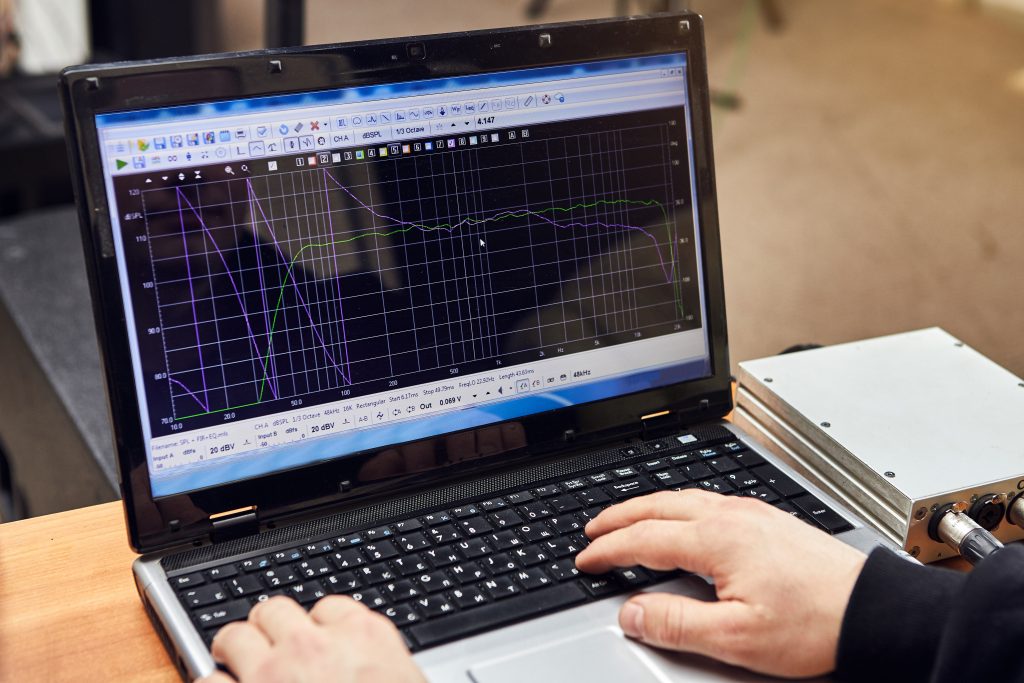
Quantifying heat loss at the junctions where building elements meet.

PSI-value junction detail

A PSI value (Ψ-value) measures the linear thermal transmittance at a junction where two building elements meet — for example, where a wall meets a floor, a window meets a wall, or a roof meets a gable. Expressed in W/mK, it quantifies the additional heat loss that occurs at these junctions beyond what the U-values of the individual elements predict.

Every building has dozens of thermal bridges at junctions, lintels, jambs, sills, corners, and balcony connections. When you submit a SAP or SBEM assessment without bespoke PSI values, default values are applied — and these defaults assume significantly higher heat loss than a well-detailed junction actually produces. The result is an artificially poor SAP score that may force you to over-specify insulation or heating systems to compensate.

Calculating bespoke PSI values based on your actual construction details almost always improves your SAP or SBEM result — often enough to downgrade insulation thickness, change heating specification, or remove the need for renewable technology. For developers building repeated house types, a single set of PSI values can be reused across every plot, making the investment pay back many times over.

Why bespoke PSI values matter

Default values overestimate heat loss. When no bespoke PSI values are provided, SAP and SBEM software applies conservative defaults from BR 497 or Approved Document L appendices. These assume worst-case junction performance and can add 10–20% to your predicted heat loss.
Part L 2021 removed ACDs. Accredited Construction Details (ACDs) — the pre-calculated junction details that many projects relied on — are no longer available under Part L 2021. You now need either bespoke PSI values or manufacturer-provided values for each junction type.
Common junctions assessed. We calculate PSI values for wall-floor, wall-roof, wall-window (lintel, jamb, sill), corner, party wall, balcony, and any other non-standard junctions in your design.

How we calculate your PSI values.

We model each junction in 2D thermal simulation software, calculating the precise heat flow path and the resulting linear thermal transmittance — tailored to your exact construction details.

01
Junction identification
We review your architectural drawings and construction details to identify every junction type in the building envelope — wall-floor, wall-roof, window openings, corners, party walls, balconies, and any non-standard details.
02
2D thermal modelling
Each junction is modelled in specialist thermal simulation software to BS EN ISO 10211. We input the exact materials, dimensions, fixings, and geometry to calculate the temperature distribution and heat flow across the junction.
03
PSI value extraction
The linear thermal transmittance (Ψ-value) is extracted from the model by subtracting the plane element heat loss (U-values) from the total heat flow. The result represents the additional heat loss attributable to the junction itself.
04
Report & SAP/SBEM integration
We deliver a detailed report with a PSI value for each junction type, along with the thermal model images and methodology. The values are formatted for direct input into SAP or SBEM software.

Information required for PSI-value calculations.

PSI-value calculations require detailed construction drawings showing exactly how each junction is built. The more detail you can provide — including insulation positions, fixing methods, and material specifications — the more accurate the result.

For developers using repeated construction details across multiple plots or house types, a single set of bespoke PSI values can be calculated once and reused on every project that uses the same details. This makes the investment particularly cost-effective for volume housebuilders.

We recommend calculating PSI values alongside your U-values and before the SAP or SBEM assessment begins. This ensures the energy model uses accurate thermal bridging data from the start, rather than relying on defaults that may push the building below compliance.

Information required

Construction detail drawings Scaled cross-sections through each junction type showing all material layers, dimensions, and fixings.
Material specifications Thermal conductivity (lambda values) for all materials in the junction, including insulation, blockwork, framing, and finishes.
Fixing details Type, material, size, and spacing of any mechanical fixings that cross the insulation layer at junctions (wall ties, brackets, lintels).
Window/door installation details Position of the frame within the wall build-up, reveal depth, and how the insulation relates to the frame.
U-value reports If U-values have already been calculated for the adjoining elements, these are needed to extract the PSI value from the total junction heat flow.
Repeated details confirmation If the same junction detail is used across multiple house types or plots, confirm which details are shared so we can maximise reuse.

Practical strategies to improve your PSI values.

Better junction details don't always cost more. Often it's about positioning insulation correctly and choosing the right fixings — changes that improve performance without adding material cost.

Insulation continuity
Maintain the insulation line at every junction
The biggest heat losses occur where insulation is interrupted — at lintels, floor edges, and roof-wall junctions. Ensuring the insulation layer is continuous or overlaps at these points dramatically reduces PSI values.
Fixing specification
Choose low-conductivity fixings
Steel lintels, wall ties, and bracket systems conduct heat directly through the insulation layer. Specifying basalt fibre ties, thermally broken lintels, or insulated bracket systems can halve the PSI value at these junctions.
Reuse across projects
Calculate once, use everywhere
If you build the same house type or use the same construction details repeatedly, one set of bespoke PSI values applies to every project. The calculation cost is spread across hundreds of plots — a fraction of a penny per dwelling.
BS EN ISO 10211 compliant modelling
All PSI values calculated using accredited 2D thermal simulation software to BS EN ISO 10211, accepted by all SAP/SBEM software, building control authorities, and warranty providers.
Coordinated with U-values and SAP
When we handle PSI values, U-values, and SAP together, every thermal parameter is consistent. No mismatched assumptions, no re-entering data, no delays.
Specification savings identified
Bespoke PSI values almost always improve your SAP result versus defaults. We quantify the improvement and advise on where this headroom can be used — thinner insulation, simpler heating, or removing renewables.
Reusable for repeated house types
For developers with standard construction details, we provide PSI value sets that can be applied across all projects using the same junctions — maximum value from a single calculation.

Local assessors for thermal bridging analysis across the Midlands and South West.

PSI-value calculations are prepared remotely from your construction details. Our assessors understand regional construction methods and common junction types.

Birmingham & West Midlands
PSI-value calculations for new builds, extensions, and housing developments across Birmingham, Solihull, Coventry, Wolverhampton, and the wider West Midlands. Bespoke junction analysis for all construction types.
Bristol & South West
Thermal bridging calculations across Bristol, Bath, South Gloucestershire, and the surrounding South West. Coordinated with SAP and SBEM for seamless Part L compliance.
Worcestershire
Based in Worcester — PSI-value calculations across Malvern, Droitwich, Evesham, Bromsgrove, and Redditch. Our home county with the fastest turnaround.
Gloucestershire
Junction thermal analysis for residential and commercial projects across Cheltenham, Gloucester, Stroud, Tewkesbury, and the Cotswolds. Reusable PSI value sets for volume housebuilders.
Oxfordshire
PSI-value calculations across Oxford, Banbury, Bicester, Witney, and the wider Oxfordshire area. Design stage analysis to improve SAP and SBEM results.
Wider England & Wales
Our PSI-value calculations are accepted by all building control authorities and energy assessment software across England and Wales.

Looking for PSI-value calculations near you? Whether you need a single junction assessed or a complete set of bespoke PSI values for a repeated house type — we deliver BS EN ISO 10211 compliant results with practical specification advice. Call 01386 365145 or email us to get started.

Common questions about PSI-value calculations.

A PSI value (Ψ-value) measures the linear thermal transmittance at a building junction — the additional heat loss that occurs where two elements meet, beyond what their individual U-values predict. It matters because thermal bridging at junctions can account for 20–30% of total heat loss in a well-insulated building. Using bespoke PSI values rather than defaults improves your SAP or SBEM score, often enough to reduce insulation thickness or simplify the heating specification.

ACDs were pre-calculated junction details that provided standard PSI values for common construction methods. They were withdrawn under Part L 2021 and are no longer available. This means projects now need either bespoke calculated PSI values or manufacturer-provided values for each junction type. Relying on default values from the SAP appendices typically results in a significantly worse energy rating.

A typical dwelling has 10–15 distinct junction types — wall-floor, wall-roof, window lintel/jamb/sill, corners, party walls, and any balconies or non-standard details. We identify all junction types during our initial review and calculate a PSI value for each. For developments with multiple house types, many junctions are shared, reducing the total number of calculations needed.

Yes — this is one of the biggest advantages of bespoke PSI values. If you use the same construction details on multiple house types or across multiple developments, the PSI values calculated for those junctions apply to every project that uses them. For volume housebuilders, this means a one-off calculation cost that benefits hundreds of plots.

Thermal bridging is a significant component of the SAP heat loss calculation. Default PSI values assume high heat loss at every junction, dragging down your SAP score. Bespoke values that reflect your actual construction quality almost always show lower heat loss, which improves the SAP rating. This headroom can be used to relax other specifications — thinner insulation, a different heating system, or removing the need for solar panels.

We use accredited 2D thermal simulation software compliant with BS EN ISO 10211. The software models the temperature distribution and heat flow across each junction in detail, accounting for all material layers, air gaps, and fixings. The resulting PSI values are accepted by all SAP and SBEM assessment software and all building control authorities in England and Wales.

Thermal bridging analysis

Need bespoke PSI values for your project?

Send us your construction details and we'll calculate precise junction PSI values that improve your SAP result and unlock specification savings.

Request a Quote →