Design & Planning As Built Client Portal 01386 365145 Request a Survey
Diagnostic · On-Site Survey

Thermographic Surveys
See what's hidden in plain sight.

Non-invasive infrared thermal imaging to identify heat loss, insulation defects, air leakage paths, thermal bridging, and moisture ingress — without any intrusive procedures.

Non-invasive
no disruption
to occupants
24 hr
report turnaround
after survey
Residential & Commercial
all building types
covered

Request a Survey

Flexible scheduling — early morning & evening slots available

Thanks — we'll confirm availability and provide a quote within one working day.

Revealing heat loss and construction defects through infrared imaging.
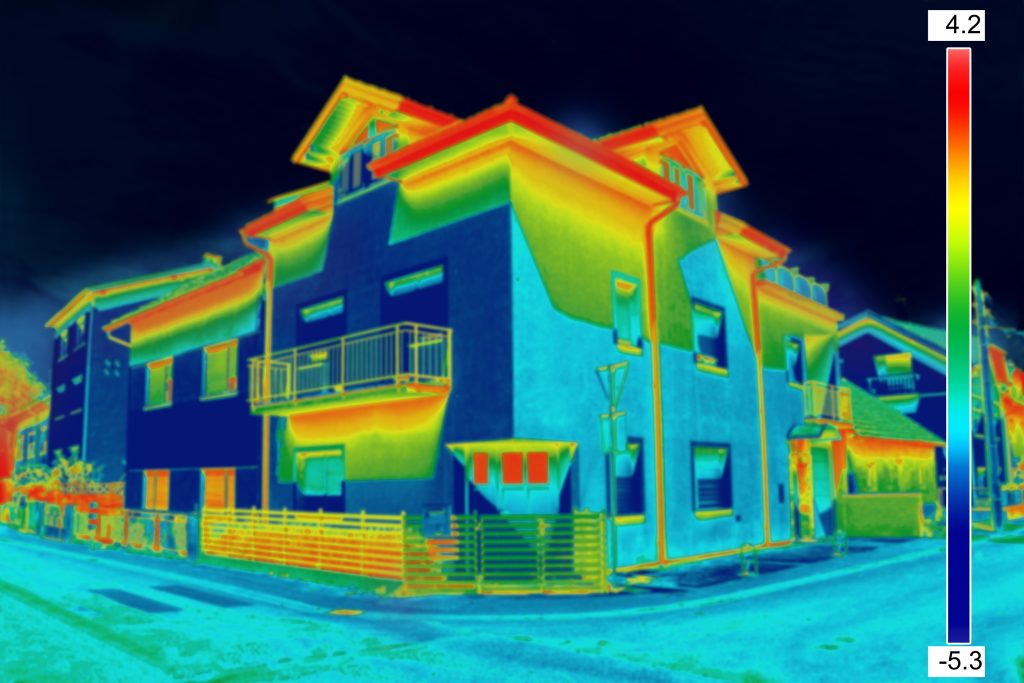
Infrared thermographic survey camera in use

A thermographic survey is a non-invasive diagnostic method that uses infrared cameras to evaluate the quality of construction by examining the thermal performance of a building's envelope. The camera detects variations in surface temperature, producing thermal images (thermograms) that reveal where heat is escaping or where anomalies exist in the building fabric.

These surveys can identify a wide range of issues including thermal bridging, missing or poorly installed insulation, air leakage paths, defective glazing units, moisture ingress, and water leaks — all without any intrusive procedures. In essence, a thermal survey provides a visual map of where heat loss occurs and where construction quality may be compromised.

Thermographic surveys are valuable both during construction — to verify workmanship before finishes are applied — and post-completion as a diagnostic tool to investigate performance issues or support remediation after a failed air tightness test. They are one of the most cost-effective ways to pinpoint exactly where problems are, saving time and money on targeted remedial work.

Common defects identified

Missing insulation — gaps or voids in wall, floor, or roof insulation invisible to the naked eye
Thermal bridging — cold spots at junctions where heat bypasses the insulation layer
Air leakage paths — draughts through gaps, service penetrations, and poorly sealed joints
Defective glazing — failed sealed units, poor frame seals, or incorrect glass specification
Moisture ingress — damp patches, water tracking, and condensation risk areas

What happens during a thermographic survey.

A typical survey takes 2–4 hours depending on building size. We work around your schedule and can survey occupied or unoccupied buildings.

01
Pre-survey conditions check
We confirm suitable conditions: a minimum temperature differential of 10°C between inside and outside, low wind speed, and no direct sunlight on the surveyed elevations. We advise on the best time to book.
02
External envelope scan
We systematically scan all external elevations using a calibrated infrared camera, capturing thermal images of walls, roofs, windows, doors, and junctions. Each image is geo-tagged and annotated.
03
Internal verification
Where external anomalies are detected, we conduct internal scans to confirm the defect from both sides. This helps distinguish between insulation defects, air leakage, and thermal bridging.
04
Report & recommendations
A detailed report is issued within 24 hours, including annotated thermal images, a summary of defects found, severity classification, and specific remediation recommendations.

Getting the best results from your thermographic survey.

Thermographic surveys rely on a temperature difference between the inside and outside of the building to produce meaningful results. The building should be heated to normal occupancy temperature for at least 24 hours before the survey, and the external temperature should be at least 10°C cooler than the internal temperature. This differential is what makes heat loss patterns visible on the thermal camera.

The best time for a survey is during the heating season — typically October to April — when natural temperature differentials are greatest. Surveys should be conducted early morning or after dark to avoid solar gain, which heats external surfaces and can mask genuine defects. We advise on optimal timing when you book and will reschedule if conditions are not suitable on the day.

Thermographic surveys can be combined with air tightness testing for maximum diagnostic value. With the blower door fan running, air leakage paths become much more visible on thermal images as cool streaks where outside air is being drawn through the building fabric. If you've failed an air test or want a pre-test diagnostic, a combined visit is the most efficient approach.

Survey conditions checklist

Heating on for 24+ hours The building must be heated to create a temperature differential between inside and outside.
10°C minimum differential A difference of at least 10°C between internal and external temperatures is required for reliable results.
No direct sunlight Solar radiation heats external surfaces and masks genuine defects. Surveys are best conducted early morning or after dark.
Low wind conditions High winds cool external surfaces and reduce the accuracy of thermal readings.
Access to all elevations We need clear access to photograph all external walls and the roof line from ground level.
Internal access if required For internal verification scans, we need access to rooms adjacent to any external anomalies.
Our certified thermography surveyors don't just capture thermal images — they interpret them accurately, classify defects by severity, and provide clear, actionable remediation advice in every report.
Certified infrared thermography surveyors
Our surveyors are trained and certified in infrared thermography, ensuring accurate interpretation of thermal images and reliable identification of construction defects.
Coordinated with air tightness testing
If you've failed an air test or want to investigate before testing, we combine thermographic surveys with pressure testing to locate and verify leakage paths efficiently.
Actionable reports — not just pretty pictures
Every thermal image is annotated with defect identification, severity classification, and specific remediation advice. Our reports tell you exactly what to fix and how.

Local certified surveyors across the Midlands and South West.

We survey residential and commercial buildings across our core service areas, with flexible scheduling including early morning and evening slots to achieve optimal survey conditions.

Birmingham & West Midlands
Thermographic surveys for new builds, existing buildings, and post-remediation checks across Birmingham, Solihull, Coventry, Wolverhampton, and the wider West Midlands.
Bristol & South West
Infrared thermal imaging across Bristol, Bath, South Gloucestershire, and the surrounding South West. Residential and commercial buildings surveyed.
Worcestershire
Based in Worcester — thermographic surveys across Malvern, Droitwich, Evesham, Bromsgrove, and Redditch. Our home county with the fastest response times.
Gloucestershire
Thermal imaging surveys across Cheltenham, Gloucester, Stroud, Tewkesbury, and the Cotswolds. Post-construction quality checks and diagnostic investigations.
Oxfordshire
Thermographic surveys across Oxford, Banbury, Bicester, Witney, and the wider Oxfordshire area. New build verification and existing building diagnostics.
Wider England & Wales
Our certified surveyors work across the whole of England and Wales. Contact us wherever your building is located.

Looking for thermographic surveys near you? Whether you need a post-construction quality check in Birmingham, a diagnostic investigation in Bristol, or a pre-air-test survey in the Cotswolds — our certified thermography surveyors deliver detailed, actionable reports. Call 01386 365145 or email us to book.

Common questions about thermographic surveys.

The ideal conditions are during the heating season (October to April) when there's a natural temperature difference between inside and outside. Surveys should be conducted early morning or after dark to avoid solar gain on external surfaces. The building should be heated for at least 24 hours before the survey, and wind conditions should be low. We advise on optimal timing when you book.

Yes. Air leakage paths show up clearly on thermal images as cool streaks or patterns where cold air is being drawn through gaps in the building fabric during pressurisation. For best results, we often combine thermographic imaging with a blower door test — the fan creates a pressure difference that amplifies air leakage signatures, making them much easier to detect and locate precisely.

Thermographic surveys are not a mandatory Building Regulations requirement. However, they are increasingly used as a quality assurance tool during construction, and some warranty providers and housing associations require them as part of their sign-off process. They are also invaluable as a diagnostic tool when investigating performance issues or failed compliance tests.

Yes. Thermographic surveys are completely non-invasive and non-disruptive. We can survey occupied buildings without affecting the occupants. The external scan requires no access to the interior at all. Internal scans, if needed, are quick and quiet — we simply point the camera at walls and ceilings.

External surveys scan the outside of the building to identify heat loss patterns, missing insulation, and thermal bridging across the entire envelope. Internal surveys scan from inside the building to verify defects, distinguish between different types of anomaly, and locate issues that may not be visible externally (such as air leakage paths or moisture behind finishes). We typically conduct both for a comprehensive assessment.

When a building fails its air tightness test, the test result tells you the building leaks too much air — but not where. A thermographic survey conducted under pressurisation (with the blower door fan running) reveals exactly where the air leakage paths are, showing them as cool streaks on the thermal image. This targeted approach means remediation can focus on the actual problem areas rather than guessing, saving significant time and cost on re-testing.

Non-invasive diagnostics

Need to find where the heat is escaping?

Tell us about your building and we'll advise on timing, conditions, and what to expect — with a clear quote before you commit.

Request a Survey →